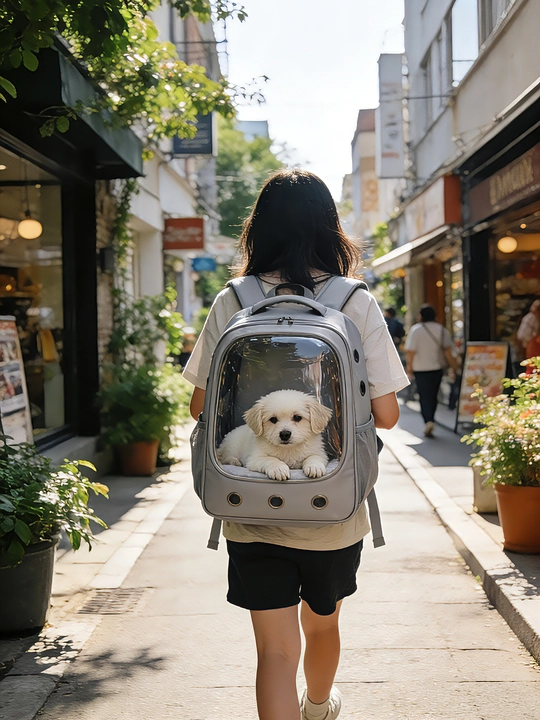
The Ultimate Guide to Choosing the Best Dog Backpack Carrier: For Travel, Hiking, and Every Adventure in Between
As a lifelong dog parent and avid adventurer, I’ve learned one non-negotiable truth: our furry family members deserve to join us on every journey—whether that’s a weekend hike through forest trails, a cross-country road trip, or a quick errand run around town. But here’s the catch: not all pups can keep up with long distances, rough terrain, or crowded spaces. That’s where a reliable
best dog backpack carrier comes in—a game-changer that lets you bring your pup along safely, comfortably, and hands-free. After testing dozens of options over the past five years (yes, my golden retriever, Luna, has been my official “test buddy” through it all), I’ve narrowed down what makes a dog backpack carrier truly exceptional. This guide isn’t just a list of products—it’s a deep dive into how to choose the perfect carrier for your pup’s needs, your lifestyle, and the adventures you share. Whether you’re searching for a
dog travel backpack for airport trips or the
best dog backpack for hiking to tackle mountain trails, we’re covering everything you need to know to make the right choice.
Let’s start with the basics: why invest in a high-quality dog backpack carrier? For me, it’s simple—my dog isn’t just a pet; she’s my constant companion. Leaving her behind on adventures feels like leaving a part of myself at home. But beyond emotional comfort, a good carrier offers practical benefits: it keeps your pup safe from hazards like busy streets, uneven terrain, or aggressive animals; it lets you keep both hands free for hiking poles, luggage, or your morning coffee; and it provides a cozy, secure space for your pup when they need a break. The problem? With so many options on the market—cheaply made carriers that dig into your shoulders, poorly ventilated bags that overheat your pup, and ill-fitting designs that leave them anxious—it’s easy to waste money on a product that doesn’t deliver. That’s why I’ve put together this guide: to help you avoid the mistakes I made and find a carrier that works for both you and your furry friend.
Why One-Size-Fits-All Dog Backpack Carriers Don’t Work (And What to Look For Instead)
When I first started shopping for a dog backpack carrier, I made the biggest mistake most pet parents make: I bought a “one-size-fits-all” model because it was affordable and had good reviews. Spoiler: it was a disaster. Luna, who was 40 pounds at the time, was squished into a carrier that was too small, her legs hanging awkwardly over the edge. The straps dug into my shoulders so badly that I could barely walk a mile before needing to stop. And the ventilation was so poor that her fur was soaked with sweat after just 20 minutes in the sun. That experience taught me a crucial lesson: dog backpack carriers are not one-size-fits-all, and the best options are designed with specific needs in mind.
The key to finding the right carrier is to prioritize three things: your dog’s size and breed, your intended use (travel, hiking, everyday use), and your own comfort. Let’s break each down.
First, your dog’s size and breed. Small breeds like Chihuahuas or Shih Tzus will need a compact, lightweight carrier that’s easy to carry for long periods. Medium breeds like Corgis or Beagles require a carrier with more support and space, while larger breeds (up to 40 pounds—Luna’s size) need a sturdy, well-padded design that distributes weight evenly. Breed-specific needs matter too: long-backed breeds like Dachshunds need carriers that support their spine (horizontal designs are best, as upright carriers can strain their backs) , while brachycephalic breeds like Pugs or Bulldogs need extra ventilation to prevent overheating .
Second, your intended use. A
dog travel backpack for air travel needs to be airline-approved (check the dimensions of your airline’s pet policy—most require carriers to fit under the seat in front of you) , lightweight, and easy to carry through airports. Look for features like collapsible designs for easy storage, multiple access points (so you can comfort your pup mid-flight), and soft, washable linings for accidents. On the other hand, the
best dog backpack for hiking needs to be durable, water-resistant, and equipped with features like padded shoulder straps, waist belts for extra support, and mesh panels for ventilation. Hiking carriers should also have storage pockets for treats, water bottles, and waste bags—because let’s be real, you don’t want to carry an extra bag on the trail.
Third, your own comfort. A carrier that’s uncomfortable for you will quickly become a burden, and you’ll end up leaving it at home. Look for adjustable shoulder straps with thick padding, waist belts to distribute weight from your shoulders to your hips, and a breathable back panel to prevent sweating. I’ve found that carriers with a sternum strap are a game-changer—they keep the backpack from shifting around as you walk, reducing strain on your back and shoulders. Trust me, after a 5-mile hike with Luna in a well-fitted carrier, I barely felt her weight—something I never thought possible after my first failed purchase.
Another thing to avoid: carriers with flimsy structures. A good carrier should have a rigid bottom to support your dog’s weight and prevent the bag from collapsing inward. This not only keeps your pup comfortable but also reduces the risk of injury if you accidentally bump into something. I also recommend looking for carriers with safety features like a harness attachment (so your pup can’t jump out) and reflective trim for visibility during early morning or evening hikes .
From Airport to Trailhead: How to Choose the Right Carrier for Every Adventure
Now that you know what to look for in a carrier, let’s dive into how to match the carrier to your specific adventures. I’ve tested carriers in every scenario—from cross-country flights to backcountry hikes—and I’ve learned that the best carrier for one activity isn’t always the best for another. Here’s a breakdown of what works for different types of adventures, plus my top tips for making the most of your carrier.
1. The Perfect Dog Travel Backpack for Air and Road Trips
Traveling with a dog can be stressful—for both you and your pup. A good
dog travel backpack should make the experience easier, not harder. When I traveled with Luna from Oregon to Florida last year, I used a carrier that was airline-approved, lightweight, and had a collapsible design. Here’s what made it a winner:
First, it was the right size for under-seat storage. Most airlines require carriers to be no larger than 18 x 14 x 8 inches, so I measured the carrier before buying to ensure it fit. The collapsible design meant I could fold it up and store it in my suitcase when it wasn’t in use—saving space in my luggage. Second, it had multiple access points: a top zipper for quick snuggles and a front zipper that let Luna stick her head out (when she was feeling brave) without escaping. Third, the lining was soft and washable—critical when your pup has an accident mid-flight (yes, it happens, and it’s okay). Finally, it had a padded shoulder strap and a handle, so I could carry it as a backpack or a tote—perfect for navigating crowded airports.
Another tip for travel carriers: look for ones with a luggage sleeve. This lets you slide the carrier onto the handle of your suitcase, freeing up both hands for boarding passes and security checks. I also recommend bringing a small blanket or toy from home to put inside the carrier—familiar scents help calm anxious pups during travel. And don’t forget to practice with the carrier before your trip! Let your pup explore it at home, add treats and toys, and take short walks with it to get them used to the feeling of being carried.
2. The Best Dog Backpack for Hiking: Durability, Comfort, and Functionality
Hiking with your dog is one of the most rewarding ways to bond, but it requires a carrier that can keep up with rough terrain and long distances. After testing over a dozen hiking carriers, I’ve found that the
best dog backpack for hiking checks three boxes: durability, comfort, and functionality.
Durability is key—hiking trails are full of rocks, branches, and mud, so your carrier needs to be made from tough, water-resistant material like 1000D nylon . Look for reinforced seams and a waterproof bottom to protect your pup from wet ground. I also recommend a carrier with a removable, washable lining—muddy paws are inevitable, and you don’t want to spend hours cleaning the carrier after a hike.
Comfort for both you and your pup is non-negotiable. For your pup, look for mesh panels for ventilation (especially important in warm weather) and a soft, padded interior. Some hiking carriers even have a built-in harness that keeps your pup secure and prevents them from shifting around. For you, adjustable padded shoulder straps, a waist belt, and a sternum strap are a must. The waist belt is especially important—it distributes the weight of your pup from your shoulders to your hips, reducing strain on your back. I once hiked 7 miles with Luna in a carrier without a waist belt, and I could barely move my shoulders the next day. Never again.
Functionality is the final piece of the puzzle. Hiking carriers should have plenty of storage space for essentials like water bottles, treats, waste bags, and a first-aid kit. Look for external pockets that are easy to access while you’re walking—you don’t want to have to take off the carrier every time you need to grab a treat. Some carriers even have a built-in water bowl for your pup, which is perfect for long hikes. I also recommend a carrier with a reflective trim—this makes you and your pup more visible to other hikers, especially during low-light conditions.
One of my favorite features in a hiking carrier is a front-facing design. This lets Luna see where we’re going, which keeps her calm and engaged. It also lets me keep an eye on her to make sure she’s comfortable. Just make sure the front-facing design is secure—you don’t want your pup to jump out if they get spooked by a squirrel or a bird.
3. Everyday Use: A Carrier That Fits Seamlessly Into Your Life
Not all adventures are big ones—sometimes, you just need to run errands, visit a friend, or take a walk around the neighborhood. For everyday use, you need a carrier that’s lightweight, easy to carry, and stylish enough to fit into your daily routine. I use a compact carrier for everyday outings with Luna—it’s small enough to fit under my arm or carry as a backpack, but roomy enough for her to sit comfortably. It has a simple design, neutral color, and a soft lining that she loves to curl up in.
For everyday carriers, look for something lightweight (under 2 pounds) and easy to clean. A machine-washable lining is a plus, as is a collapsible design for storage. You don’t need all the bells and whistles of a hiking or travel carrier—just something that’s comfortable for you and your pup. I also recommend a carrier with a shoulder strap that’s adjustable, so you can wear it as a backpack or a tote depending on your outfit and the occasion.
Common Mistakes to Avoid When Buying a Dog Backpack Carrier (From Someone Who’s Made Them All)
Over the years, I’ve made my fair share of mistakes when buying dog backpack carriers. From buying the wrong size to choosing style over function, I’ve learned what not to do the hard way. Here are the most common mistakes pet parents make—and how to avoid them.
Mistake #1: Buying a carrier that’s too small (or too big). This is the biggest mistake I see. A carrier that’s too small will squish your pup, causing discomfort and anxiety. A carrier that’s too big will let your pup shift around, increasing the risk of injury and making it harder for you to carry. The solution? Measure your dog before buying. Measure their length (from nose to base of tail), height (from floor to top of shoulders), and weight. Then, check the manufacturer’s size chart to find the right fit. When in doubt, go up a size—you can always add a blanket to make it cozier, but you can’t stretch a carrier that’s too small.
Mistake #2: Prioritizing style over function. It’s tempting to buy a carrier that looks cute, but if it’s not comfortable or functional, you’ll never use it. I once bought a stylish carrier with a leather exterior, but it had no padding, poor ventilation, and straps that dug into my shoulders. It sat in my closet for months before I donated it. Instead, focus on function first—comfort, durability, and safety. You can find carriers that are both functional and stylish (my current hiking carrier is a sleek gray color that matches my hiking gear, and it’s still incredibly functional).
Mistake #3: Forgetting about your own comfort. A carrier that’s uncomfortable for you is useless. I’ve seen pet parents buy carriers that are perfect for their pups but have thin, unpadded straps that make carrying their dog a chore. Always test the carrier (if possible) before buying—put it on with a weighted bag (to simulate your dog’s weight) and walk around. If the straps dig into your shoulders or the weight feels unbalanced, keep looking.
Mistake #4: Ignoring your dog’s preferences. Every dog is different—some love being carried, while others need time to adjust. If your pup seems anxious in the carrier, don’t force it. Start by letting them explore the carrier at home, add treats and toys, and take short walks with it. If they still hate it, try a different style (some dogs prefer front-facing carriers, while others prefer back-facing). Remember, the goal is to make your pup feel safe and comfortable—not stressed.
Mistake #5: Buying a cheaply made carrier to save money. I get it—dog gear can be expensive. But a cheap carrier will break quickly, and you’ll end up spending more money replacing it than if you’d bought a high-quality one upfront. Look for carriers from reputable brands that offer warranties—this shows they stand behind their product. My current hiking carrier cost a bit more than I wanted to spend, but it’s lasted three years and still looks like new. It’s worth the investment.
Final Thoughts: The Best Dog Backpack Carrier Is the One That Works for You and Your Pup
At the end of the day, there’s no “perfect” dog backpack carrier—only the one that fits your dog’s needs, your lifestyle, and the adventures you share. Whether you’re searching for a
dog travel backpack for your next trip, the
best dog backpack for hiking to explore new trails, or a simple carrier for everyday use, the key is to prioritize comfort, safety, and functionality. Take the time to measure your dog, test the carrier (if possible), and read reviews from other pet parents. And remember, the best carrier is the one that lets you and your pup enjoy every adventure together—without stress, discomfort, or compromise.
After years of testing and experimenting, I’ve found my go-to carriers: a compact, airline-approved model for travel, a sturdy, water-resistant carrier for hiking, and a lightweight design for everyday use. Each one is tailored to my needs and Luna’s, and they’ve made our adventures together so much more enjoyable. I hope this guide helps you find the perfect carrier for you and your furry friend—because no pup should be left behind.
0 Comments