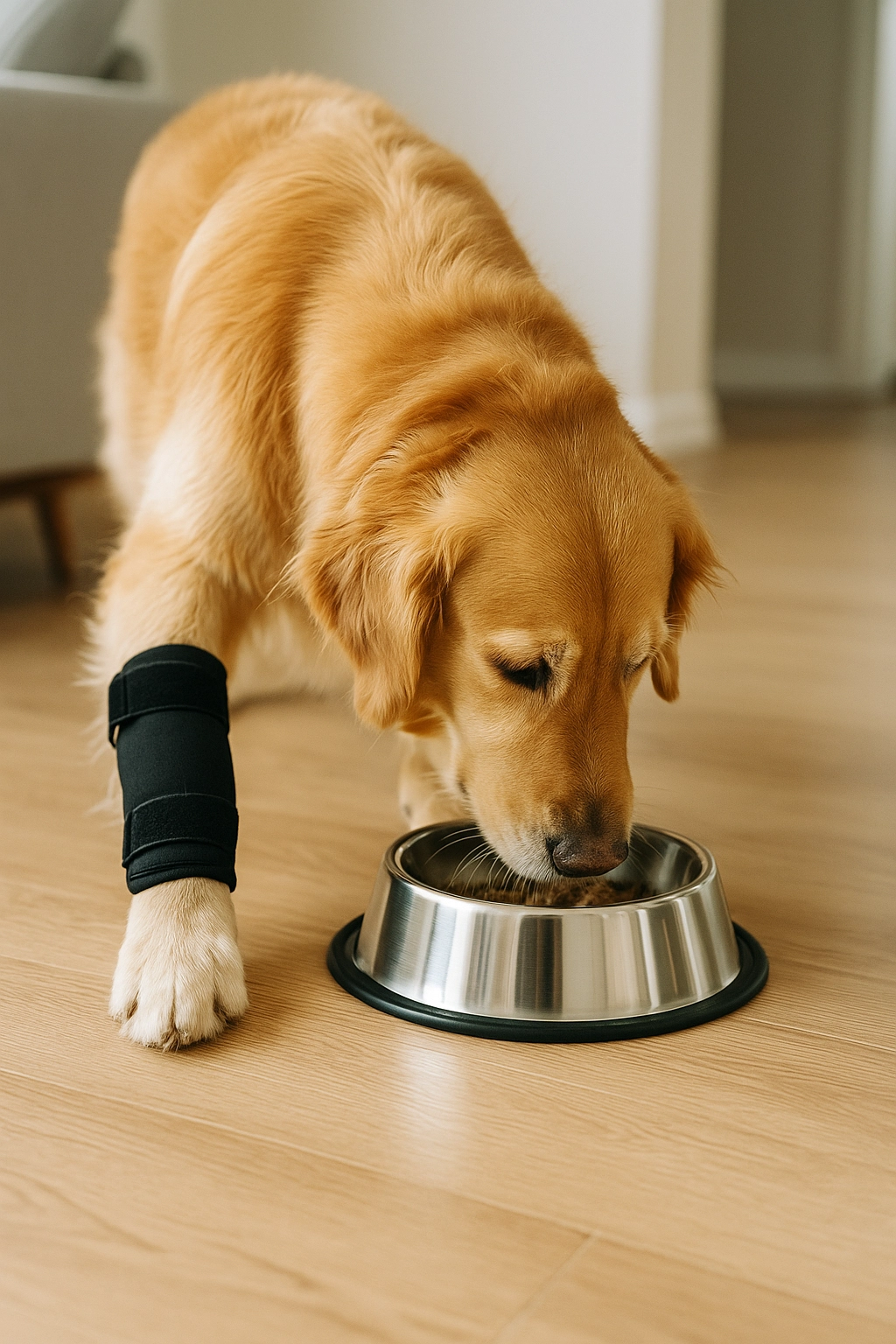
�� Rebuilding Strength: A Modern Look at Dog Elbow Support and the Future of Canine Mobility Care
Some products enter the pet industry quietly. Others reshape it. Dog elbow support is one of those rare categories that started as a niche rehabilitation tool but has now become a symbol of how far canine health and mobility science have evolved. Once overlooked, elbow issues are now recognized as one of the most common sources of chronic pain in dogs—affecting working breeds, seniors, athletic companions, and even genetically predisposed puppies.
What began as basic wraps has grown into a refined field of engineered support devices. Whether pet parents are searching for a dog elbow brace for arthritis, veterinarians are prescribing targeted mobility aids, or brands are developing advanced orthopedic solutions, one truth is clear: the world of elbow brace for dogs has entered a new era defined by science, empathy, and innovation.
This article avoids the usual “symptoms–solutions–benefits” formula. Instead, we follow the arc of a dog’s mobility journey—from the invisible onset of elbow strain to the role of engineering, manufacturer expertise, and emotional connection in designing effective elbow support.
◆ I. Where Mobility Fails: Understanding Why Dogs Need Elbow Support
Dogs rarely show weakness until pain becomes unavoidable. Their instinct is to mask discomfort. This makes elbow injuries and degeneration one of the least-detected conditions early on.
1. The Hidden Mechanics of a Dog’s Elbow
A dog’s elbow joint is a meeting point of three bones. Every jump, sprint, turn, or staircase descent relies on this structure. Over time, tiny micro-strains accumulate. Working dogs show it sooner. Large breeds feel it harder. Seniors suffer most.
2. The Slow March of Arthritis
Arthritis doesn’t begin with a limp. It begins with:
-
Subtle slowness
-
Hesitation before getting up
-
Reduced playfulness
-
Favoring one side
This is why a dog elbow brace for arthritis is not just a medical tool. It is a way to restore confidence in movement.
3. Congenital and Structural Causes
Elbow dysplasia, cartilage wear, and ligament strain often originate from genetics, rapid growth, or repeated impact during exercise. Dogs compensate silently—shifting weight, altering gait—until disability becomes visible.
This is where early intervention matters most.
◆ II. The Dog’s Perspective: Pain, Adaptation, and the Need for Gentle Support
Before discussing engineering, we need to understand how dogs experience elbow pain.
1. Pain Changes Behavior Long Before Posture
Pain makes dogs:
-
Withdraw socially
-
Avoid stairs
-
Reduce speed
-
Lose enthusiasm
A brace interrupts this cycle—not just physically but psychologically.
2. Stability Reduces Fear
Pain creates hesitation. Hesitation leads to reduced activity. Reduced activity accelerates muscle loss. A well-designed brace gives:
-
Predictable movement
-
Joint alignment
-
Compression warmth
-
The confidence to trust their own body again
This emotional component is often overlooked in clinical analysis.
3. Warmth as a Healing Signal
Compression braces produce warmth that:
-
Increases circulation
-
Loosens stiff joints
-
Reduces swelling
-
Soothes chronic aches
For senior dogs, warmth equals relief.
◆ III. Inside the Engineering: How Modern Elbow Braces for Dogs Are Built
Today’s braces are no longer simple sleeves. They are orthopedic devices shaped by veterinary insight, materials science, and precision manufacturing.
1. Contoured Designs That Follow Anatomy
A modern elbow brace for dogs must mimic canine movement. That requires:
-
Articulated shaping
-
Angled stabilizers
-
Stretch zones for full range of motion
-
Anti-slip anchoring systems
The goal is stability without restriction.
2. Medical-Grade Fabric Selection
Manufacturers now use:
-
Breathable neoprene
-
Anti-chafe inner lining
-
Skin-safe elastic straps
-
Lightweight cushioning pads
Dogs wear braces for hours, so fabrics must avoid irritation.
3. Adjustable Compression for Multiple Conditions
Mild arthritis requires gentle support. Post-injury recovery needs firmer stabilization. Customizable straps allow one brace to adapt to different dogs—and different healing stages.
4. Reinforced Stress Points
Every brace must survive:
-
Running
-
Scratching
-
Digging
-
Sudden directional changes
-
Daily wear and tear
Reinforced seams and pressure pads prevent failures during active use.
◆ IV. The Manufacturer’s Role: Quality, Customization, and Responsibility
Factories producing elbow supports for dogs are no longer making “generic pet products.” They are manufacturing medical-grade mobility aids.
1. Precision Stitching and Panel Alignment
Accuracy matters. A misplaced seam can cause chafing. An uneven panel can destabilize the joint. Manufacturers must operate with the precision of healthcare product suppliers.
2. Custom-Fit Possibilities
Brands increasingly request:
-
Breed-specific fitting models
-
Size customization
-
Left/right elbow variations
-
Premium trim options
A dog elbow support becomes a personalized mobility solution, not a generic wrap.
3. Veterinary Collaboration
The best products emerge when manufacturers collaborate with:
-
Veterinary orthopedists
-
Canine physical therapists
-
Rehabilitation clinics
This ensures braces support natural biomechanics.
4. Scalable Quality Standards
For B2B buyers ordering at scale, consistency is non-negotiable. Manufacturers must deliver:
-
Identical compression levels
-
Uniform stitching density
-
Repeatable material elasticity
-
Reliable durability across batches
Consistency builds trust.
◆ V. The Human–Dog Bond: Why Mobility Products Matter Emotionally
Beneath engineering and manufacturing lies something deeper: the emotional reality of caring for a dog in pain.
1. A Dog’s Movement Is Their Identity
Running, jumping, playing—these define a dog’s joy. When mobility fades, personality dims. Restoring movement restores identity.
2. Owners Seek Hope, Not Just a Product
A brace offers owners:
-
A non-surgical option
-
A sense of control
-
A tangible way to comfort their pet
-
A way to slow degeneration
It is not simply a physical tool—it is an emotional anchor.
3. The Silent Gratitude of a Dog in Relief
Few things match the quiet transformation when a dog realizes: “This doesn’t hurt anymore.”
This is why the category of elbow support continues to grow.
◆ VI. Future Directions: Where Canine Mobility Science Is Heading
Innovation in elbow support is accelerating rapidly.
1. Smart Braces
Future designs may include:
-
Heat-therapy regulation
-
Motion tracking
-
Pressure-sensor alignment tools
-
App-connected rehabilitation guidance
2. Sustainable Materials
Eco-conscious alternatives will replace petroleum-based neoprene.
3. 3D-Printed Orthopedic Fitting
Custom braces delivered with near-medical precision.
4. Integrated Recovery Systems
Braces paired with:
-
Cooling wraps
-
Massage therapy modules
-
Adjustable compression sleeves
The future is holistic, not isolated.
0 Comments